
Teacher Observation Workflows for Small Schools: A Solo Administrator’s Guide to Lightweight Evaluations
Master teacher observations as a solo school administrator. Build agile, zero-overhead walkthrough workflows and automated dashboards without dedicated staff.
Two boys in school uniforms using a laptop in a classroom, promoting teamwork and technology in education.
Leading a small, independent, or rural school comes with a relentless reality: the principal is simultaneously the head of school, student disciplinarian, substitute coordinator, testing director, and instructional leader. In this all-hands environment, traditional teacher evaluation models designed for large central offices collapse under their own weight. Comprehensive 60-page rubrics and marathon 45-minute classroom visits demand dozens of hours of clerical synthesis that a solo administrator simply does not have. The tragic result is that classroom observations are either relegated to late-spring compliance marathons or abandoned altogether. It is time to abandon bureaucratic evaluation rituals. By building an agile, zero-overhead observation workflow, solo school leaders can escape the compliance trap, systematically visit every classroom weekly, and deliver high-leverage coaching that empowers educators—all without spending a dime on enterprise software or burning out in the process.
The Solo Administrator Bottleneck: Why Enterprise Evaluation Models Fail Small Schools
Enterprise teacher evaluation models fail small schools because they require administrative hierarchies, data analysts, and multi-hour compliance documentation that overwhelm solo principals responsible for whole-building operations. In contrast, effective instructional leadership in lean environments hinges on agile, frequent touchpoints that prioritize real-time coaching over administrative paperwork.
 Close-up of a teacher marking a test paper with a red marker on a desk.
The Pitfalls of District-Scale Software Bloat and Complex Rubrics
Enterprise educator effectiveness platforms are engineered for large metropolitan districts managing compliance across dozens of campuses. They feature convoluted permission matrices, labyrinthine menu hierarchies, and mandatory multi-page rubrics. Frameworks such as Charlotte Danielson’s Framework for Teaching and the Marzano Focused Teacher Evaluation Model contain dozens of distinct components and dozens to hundreds of sub-indicators.
While theoretically comprehensive, auditing a teacher against 22 to 60 discrete behavioral indicators during a single lesson produces cognitive overload for the observer. For a solo administrator without a curriculum director or assistant principal, logging into a bloated software platform to click through dozens of drop-down menus creates severe administrative friction. According to research synthesized in the Wallace Foundation's landmark synthesis on principal leadership, instructionally focused interactions yield substantial learning gains, but only when leaders can engage consistently rather than getting bogged down in administrative machinery. When the evaluation tool demands more time than the actual classroom observation and coaching dialogue combined, the system actively discourages instructional presence.
The Reality of Operational Drag: Balancing Crisis Management with Classroom Visits
In a standalone school, operational drag is constant. A missing bus driver, an upset parent in the front office, a cafeteria inventory shortfall, or a student behavioral crisis immediately lands on the principal's desk. In a district setting, these responsibilities are divided among assistant principals, deans of students, and central office coordinators.
When a solo principal schedules a 45-minute formal observation paired with a 30-minute pre-conference and a 45-minute post-conference, that two-hour calendar block is extraordinarily fragile. The first operational hiccup shatters the block, forcing a cancellation. As reschedulings mount, anxiety increases for both teacher and administrator. Over time, the solo administrator develops calendar guilt: classroom observations begin to feel like an impossible luxury competing directly with the basic logistical survival of the facility.
Decoupling Statutory Compliance from Meaningful Instructional Coaching
The foundational failure of traditional supervision is conflating state-mandated summative accountability with ongoing formative professional growth. State education agencies typically require one or two formal summative ratings per educator annually. However, attempting to use that high-stakes, legally binding summative instrument for day-to-day instructional growth paralyzes the process.
Rigorous research from the Measures of Effective Teaching (MET) project by the Bill & Melinda Gates Foundation demonstrated that single-lesson formal observations are statistically unreliable measures of instructional quality due to natural day-to-day lesson variance. Furthermore, when an evaluation carries formal rating stakes, teachers naturally perform rehearsed, scripted lessons—the notorious "dog and pony show"—rather than demonstrating normal daily practice where authentic coaching is needed. Solo administrators must separate compliance from coaching. Fulfill statutory requirements using the bare minimum necessary administrative sessions, and dedicate the bulk of your instructional energy to lightweight, formative walkthrough routines designed purely for teacher development.
Building a Zero-Overhead Data Capture System on a Budget
A zero-overhead observation capture system replaces expensive district software by linking free mobile input forms directly to cloud spreadsheets and automated visual dashboards. This setup enables a solo administrator to record bite-sized classroom evidence in seconds and instantly aggregate school-wide instructional trends without manual data entry or technical staff.
 From below of monitor of modern computer with opened files on blue screen
Designing Mobile-Friendly, Auto-Aggregating Observation Forms
You do not need a five-figure software contract to collect actionable instructional data. A solo administrator can build a high-performance, mobile-optimized observation tool in under 30 minutes using Google Forms for mobile field data entry. When designed properly, the form can be saved directly as an icon on your smartphone or tablet home screen, turning your handheld device into an agile field-recording clipboard.
To keep data entry friction near zero, design the form with minimal inputs:
- Header Elements: Dropdown menu for Teacher Name, Date/Time stamp (automated), and Class/Period selector.
- Core Focus Area: A single-select dropdown or radio-button group mapping to your quarterly school-wide instructional target (e.g., Formative Checking for Understanding, Academic Task Rigor, Ratio of Student-to-Teacher Talk).
- Factual Observation Notes: A single multi-line open text box for low-inference, factual scripting (recording verbatim student and teacher statements rather than subjective opinions).
- Actionable Next Step: A concise text field designating one specific tweak for the teacher's next lesson.
- Notification Checkbox: A checkbox toggle that, via a simple Google Workspace trigger or free add-on, automatically routes a copy of the coaching notes directly to the teacher's email inbox upon submission.
Pruning Multi-Page Frameworks into High-Leverage Look-Fors
The secret to sustainable data collection is radical rubric reduction. Instead of wading through hundreds of performance indicators derived from expansive rubrics or behavioral observation instruments like the Classroom Assessment Scoring System (CLASS), solo administrators must distill their evaluation criteria into three to five "Power Indicators."
| Broad Instructional Dimension | Enterprise Rubric Sprawl | Lean Solo-Admin "Power Look-For" |
|---|---|---|
| Active Engagement | Multiple sub-indicators detailing physical posture, voice inflection, and group transitions | Ratio: Are the majority of students actively writing, speaking, or problem-solving rather than passively listening? |
| Checking for Understanding | Multiple sub-indicators covering pre-tests, pacing checks, and formal rubric assessments | In-the-Moment Data Check: Does the teacher verify understanding from all students before releasing them to independent work? |
| Intellectual Rigor | Dozens of sub-indicators evaluating cognitive depth, alignment matrices, and cross-curricular links | Cognitive Lift: Who is doing the heavy intellectual work—the teacher explaining the answer, or the students unpacking the evidence? |
| Classroom Culture | Numerous sub-indicators auditing physical layout, behavioral tracking systems, and rules postings | Standard of Compliance: Does the teacher address off-task behavior immediately and with a calm, invisible correction? |
By limiting your mental focus to these high-leverage levers, you eliminate cognitive fatigue. You enter the room knowing precisely what you are assessing, allowing you to capture high-fidelity qualitative evidence within minutes.
Creating Automated Summary Dashboards Without Data Analyst Support
Solo administrators rarely have the luxury of an institutional research department or data analyst to compile observation summaries. Fortunately, by leveraging native cloud integrations, your observation entries can populate visual dashboards automatically.
[Mobile Device: Google Form]
           │
           ▼ (Instant Auto-Sync)
[Cloud Database: Google Sheets]
   ├── Clean Timestamps & Teacher Records
   ├── Nested Aggregation via QUERY & COUNTIF
   └── Automated Row-Level Email Dispatch
           │
           ▼ (Live Connector Engine)
[Automated Dashboard: Google Looker Studio]
   ├── School-Wide Walkthrough Count vs. Monthly Target
   ├── Heatmap: Instructional Levers Evaluated
   └── Longitudinal Trendlines Across Academic Quarters
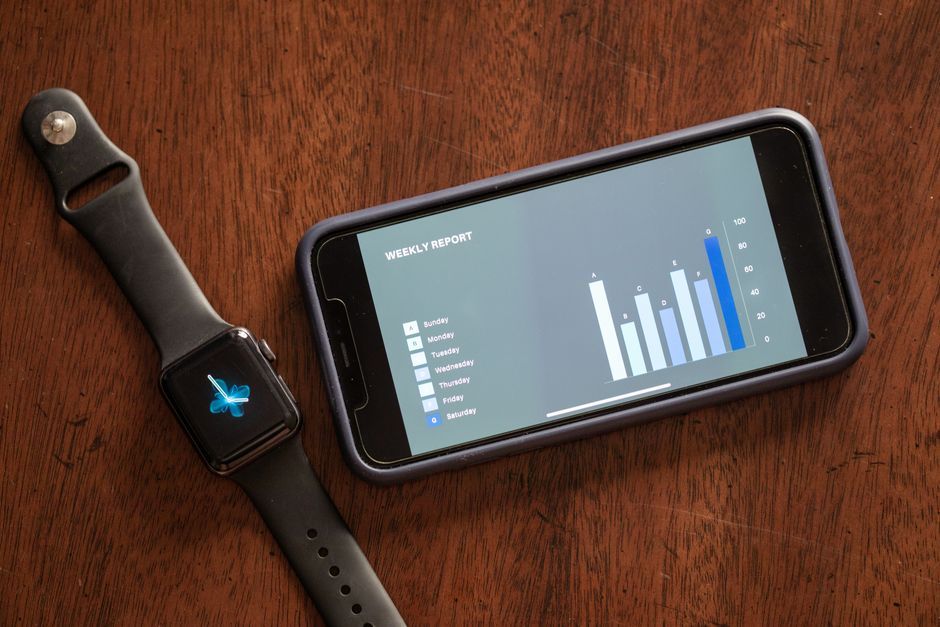
By linking your raw form sheet directly to Google Sheets formulas and auto-aggregation, you can calculate real-time completion rates using simple COUNTIF formulas. To take it one step further, connect the sheet to Google Looker Studio using free pre-built templates. The resulting dashboard provides an executive overview of your school's instructional landscape: which departments have received visits this month, which instructional strategies are dominating practice, and where coaching interventions should be deployed during upcoming professional development sessions.
The Micro-Walkthrough Cadence: Replacing 45-Minute Formal Visits
Replacing traditional 45-minute formal observations with a weekly cadence of 10-to-12-minute micro-walkthroughs provides frequent, authentic snapshots of everyday student learning while fitting realistically into a solo principal’s volatile schedule. By targeting a single instructional lever per visit and shielding calendar blocks against daily operational fires, leaders can consistently observe every classroom dozens of times each year.
 A close-up of a wall clock showing time and humidity, reflecting light and shadows.
The 10-to-12-Minute Focus Visit: Structure and Scope
Pioneered by supervisory expert Kim Marshall and detailed extensively in publications like ASCD's Educational Leadership, short, frequent, unannounced observations systematically outperform traditional episodic evaluation. A 10-to-12-minute observation captures the authentic rhythm of instruction without disrupting classroom flow.
To maximize the efficiency of a 12-minute visit, follow a strict three-phase observational anatomy:
- Minutes 0–3: Context and Orientation. Enter quietly, avoid interrupting the teacher, and locate the learning objective or task prompt. Check what students are expected to produce during the period.
- Minutes 4–8: Student Evidence Gathering. Move directly to the desks. Discreetly ask two or three students: "What are you working on right now?" and "How do you know if your work is correct?" Their answers instantly reveal whether lesson objectives are transparent and whether students understand success criteria.
- Minutes 9–12: Teacher Instruction and Scripting. Position yourself to observe the teacher’s real-time instructional checks, questioning techniques, and student interactions. Record exact quotes and low-inference observations into your digital form, then exit with a non-verbal affirmation.
The Single-Objective Strategy: Evaluating One Instructional Lever at a Time
One of the most debilitating traps for a solo administrator is trying to evaluate everything at once: objectives, room acoustics, pacing, student engagement, whiteboard organization, and assessment rubrics. This scattered approach dilutes observation notes and produces vague, unhelpful feedback.
Instead, adopt the single-lever strategy popularized by the Relay Graduate School of Education's coaching methodologies. Narrow your observation to one specific, bite-sized instructional lever per walkthrough cycle. For example, during a two-week sprint focused on Check for Understanding, ignore peripheral flaws like board clutter and focus solely on how the teacher checks for mastery before independent practice. This laser focus makes recording effortless, sharpens your diagnostic eye, and produces precise, actionable coaching takeaways.
Calendar-Defense Protocols to Protect Observation Blocks from Daily Fires
If you leave your classroom visits to "whenever I find free time," you will never visit a single classroom. Operational emergencies will consume every vacant minute. Solo administrators must implement defensive calendaring tactics to safeguard their instructional presence:
- The Daily Power Block: Schedule three non-negotiable 15-minute observation windows across your daily calendar (e.g., 9:00–9:15 AM, 11:15–11:30 AM, 1:30–1:45 PM). Treat these blocks with the same inviolable urgency as an IEP meeting or board conference.
- The "Triage First" Protocol: Never schedule observations during the first 30 minutes of the morning. Use that initial window to handle substitute coverage, check urgent parent emails, and stabilize morning drop-off. Once the building is steady, step into classrooms.
- Front Office Armor: Train your office manager or administrative assistant to act as a physical buffer. When you enter your observation block, communicate: "I am conducting classroom rounds until 10:00 AM. Unless an emergency involves physical safety, medical triage, or law enforcement, please take a message and let them know I will return to my desk at 10:05 AM."
Frictionless Feedback Loops: Guaranteeing 24-Hour Debrief Turnaround
To guarantee a 24-hour feedback turnaround without exhaustion, solo leaders must combine mobile voice-to-text dictation and standardized coaching stems with asynchronous digital debriefs. Reserving face-to-face debriefs for high-priority needs through targeted five-minute conversations ensures teachers receive actionable next steps before instructional momentum fades.
 Close-up of a smartphone and smartwatch displaying a weekly report on a wooden table.
Mobile Voice-to-Text Capture and Reusable Coaching Stems
The greatest source of administrative latency is typing polished post-observation summaries after school hours. By late afternoon, a solo administrator is physically and mentally exhausted; facing a backlog of detailed reports leads directly to administrative paralysis.
Eliminate the writing bottleneck by leveraging native voice-to-text dictation tools built into your mobile phone immediately upon leaving the classroom. Stand in the hallway for 60 seconds, tap your form's text field, and dictate your observation notes using low-inference language.
Standardize your notes using proven coaching stems to ensure precision:
- The Affirmation Stem: "Notice: During the transition to independent practice, all students engaged with the graphic organizer within 45 seconds of your countdown."
- The Probing Question Stem: "Reflection: When three students gave incorrect answers during guided practice, what data informed your decision to move forward rather than pause for re-teaching?"
- The Bite-Sized Action Stem: "Next Step: In tomorrow's lesson, require all students to show a silent thumb-signal response before calling on individual hands."
Synthesized in the seminal Visible Learning meta-analyses on teacher feedback, actionable, immediate feedback that explicitly tells a learner where to go next produces profound performance improvements. Speed and clarity always trump lengthy prose.
Asynchronous Micro-Feedback: Delivering High-Impact Notes Without Meeting Fatigue
Attempting to schedule a 30-minute sit-down conference for every single classroom visit is mathematically impossible for a single administrator overseeing dozens of teachers. It creates crippling scheduling conflicts and drains planning periods, fostering resentment among teachers who need their prep time to grade and organize lessons.
For the vast majority of routine observations, rely on rapid asynchronous micro-feedback. When your observation form automatically emails the teacher your low-inference scripting, affirmation, and single next step within an hour of your visit, the feedback loop closes instantly. Encourage teachers to close the loop asynchronously by responding to the email with a single sentence: "Got it! I will implement this adjustment during period 4 tomorrow." This establishes a responsive professional dialogue without consuming valuable planning time.
Structuring Actionable Five-Minute Debriefs for High-Priority Coaching Needs
When an observation uncovers a persistent pedagogical struggle or a classroom management breakdown, asynchronous notes are insufficient. These situations require a direct, face-to-face coaching conversation. However, these meetings do not need to take 45 minutes; a disciplined five-minute debrief held at the teacher's classroom door or during hallway duty is far more effective.
Follow the Six Steps for Effective Feedback model developed by Paul Bambrick-Santoyo in Leverage Leadership:
- Praise (30 Seconds): State one concrete, positive technique observed during the visit.
- Probe (90 Seconds): Ask a targeted question that directs the teacher's attention to the instructional gap (e.g., "What did you notice about the completion rate on question three during group work?").
- Action Step (60 Seconds): Name a bite-sized, observable instructional technique to implement within 24 hours.
- Practice/Role-Play (90 Seconds): Have the teacher rehearse the technique on the spot. If the action step is giving clear transitional directions, have them simulate the direction and wait-time with you acting as a student.
- Follow-Up Commitment (30 Seconds): Agree on a specific date and class period when you will return to observe the newly practiced skill in action.
Distributing Growth: Peer Rounds and Teacher-Led Reflection
Solo administrators multiply coaching capacity across the building by mobilizing low-stakes peer learning rounds, teacher-directed video self-reflection, and school-wide trend analysis. Distributing observation responsibilities transforms evaluation from top-down supervisory scrutiny into a collaborative, teacher-owned culture of professional inquiry.
 Serious African American female teacher standing near desk and explaining information during biology lesson
Establishing Low-Stakes Peer Walkthroughs to Multiply Coaching Touchpoints
Instructional improvement cannot rest exclusively on the shoulders of one administrator. When coaching comes solely from the principal, it inherently reinforces a hierarchical, evaluative dynamic. By establishing non-evaluative peer observation rounds—modeled on Harvard Graduate School of Education’s research on instructional rounds—you turn your entire faculty into instructional partners.
In a small school, establish "Pineapple Charts" or open-door visiting schedules. Teachers dedicate one planning period every two weeks to visit a colleague's room for just 15 minutes with a focused inquiry lens (e.g., observing student questioning techniques or laboratory transitions). The observer leaves a brief, supportive note highlighting one effective strategy they plan to borrow for their own classroom. Because peer observations carry zero evaluative weight, anxiety evaporates, deprivatizing classroom practice across the campus.
Teacher-Driven Video Analysis and Self-Assessment Protocols
A transformative tool for solo administrators with limited coaching hours is teacher-directed video self-reflection. When teachers record and review their own instruction, they notice habits, pacing lapses, and student dynamics that no administrative memo could ever adequately describe.
Equip classrooms with simple tablet swivels or smartphone tripods. Ask teachers to record a 15-minute segment of a core instructional lesson once per month. Instead of requiring the administrator to review the entire video, utilize a targeted self-assessment protocol:
- The teacher reviews their own recording with an observation checklist focused on student engagement ratios and wait-time.
- The teacher selects a 90-second video timestamp that represents either an instructional breakthrough or a persistent point of confusion.
- The teacher emails the 90-second timestamp link to the principal with a reflective prompt: "Notice how students responded at 06:30 when I altered the discussion prompt. How could I scaffold this better for my struggling readers?"
- The solo administrator watches only that 90-second clip and provides targeted feedback in three minutes, radically shrinking coaching overhead while empowering educator self-efficacy.
Consolidating Walkthrough Trends for Staff-Wide Professional Development
Individual walkthrough data should never languish in an isolated spreadsheet. When aggregated across several weeks, micro-walkthrough data reveals the authentic professional development needs of your entire building.
Rather than guessing what topics to cover during monthly staff meetings or contracting costly outside consultants, query your automated observation dashboard. If your observation records show that most classrooms demonstrate strong classroom management but struggle with high-order formative questioning, you have identified your next school-wide professional development cycle.
Dedicate your next faculty meeting to addressing that exact aggregate trend:
- Share an anonymous, school-wide metric: "Over the past month, our walkthrough logs indicate high on-task engagement, but only a minority of visited lessons incorporated an all-student response check before independent work."
- Introduce a single, universal technique to solve the gap (e.g., choral response routines or mini-whiteboard checks).
- Run a deliberate practice session where teachers script and rehearse the technique in grade-level or subject-matter pairs.
- Announce that administrative walkthroughs over the next three weeks will focus exclusively on celebrating and coaching that specific technique.
By connecting micro-walkthroughs directly to collective professional learning, the observation system ceases to be an isolated administrative burden. It transforms into an integrated engine of instructional excellence that elevates the entire school community.
Conclusion: Sustainable Instructional Leadership for the Solo Administrator
Leading a school without an administrative support network or data analytics staff is undeniably challenging, but it also offers a distinct operational advantage: agility. Free from district bureaucracy, cumbersome approval chains, and multi-layered compliance mandates, a solo administrator can implement changes overnight.
By replacing 60-page evaluation rubrics with lean power look-fors, substituting marathon 45-minute formal inspections with 12-minute micro-walkthroughs, and automating data aggregation through accessible cloud tools, you eliminate administrative overhead. More importantly, by returning high-impact feedback within 24 hours and empowering peer-led inquiry, you cultivate an environment where coaching is viewed not as a dreaded administrative inspection, but as a valued catalyst for teacher success.
Sustainable instructional leadership does not require a central office staff or enterprise budgets. It simply requires a clear focus, defended calendars, and lightweight workflows that keep you where leadership matters most: present, engaged, and actively supporting student learning in the classroom every day.
Written by
Muhammad Amin — Co-founder, Voxento
I co-founded Voxento and build the platform. I work directly with the schools and training teams running observations and AI roleplay on it, which is where most of what I write here comes from.
Related reading
- Quarterly Walkthrough Review Meeting Agenda: A Master Framework for Instructional Leadership Teams
Transform classroom walkthrough data into school improvement with this step-by-step 90-minute review agenda and calibration framework for leadership teams.
- Building Teacher Observation Evidence for Summative Evaluation: A Year-Round Leadership Playbook
Eliminate the spring evaluation scramble. Discover how to build defensible, year-round teacher observation evidence using frequent walkthroughs and rubrics.
- Building a School Walkthrough Dashboard for School Board Governance That Leaders Actually Read
Learn how to build a school walkthrough dashboard for board governance that replaces dense spreadsheets with actionable, high-level instructional trends.
Put these ideas into practice with Voxento.
See how observations, evaluations, coaching, and walkthroughs work in one workspace.